
Already sent money? Do this now.

Wire safety · California escrows

Wire fraud: call before you wire

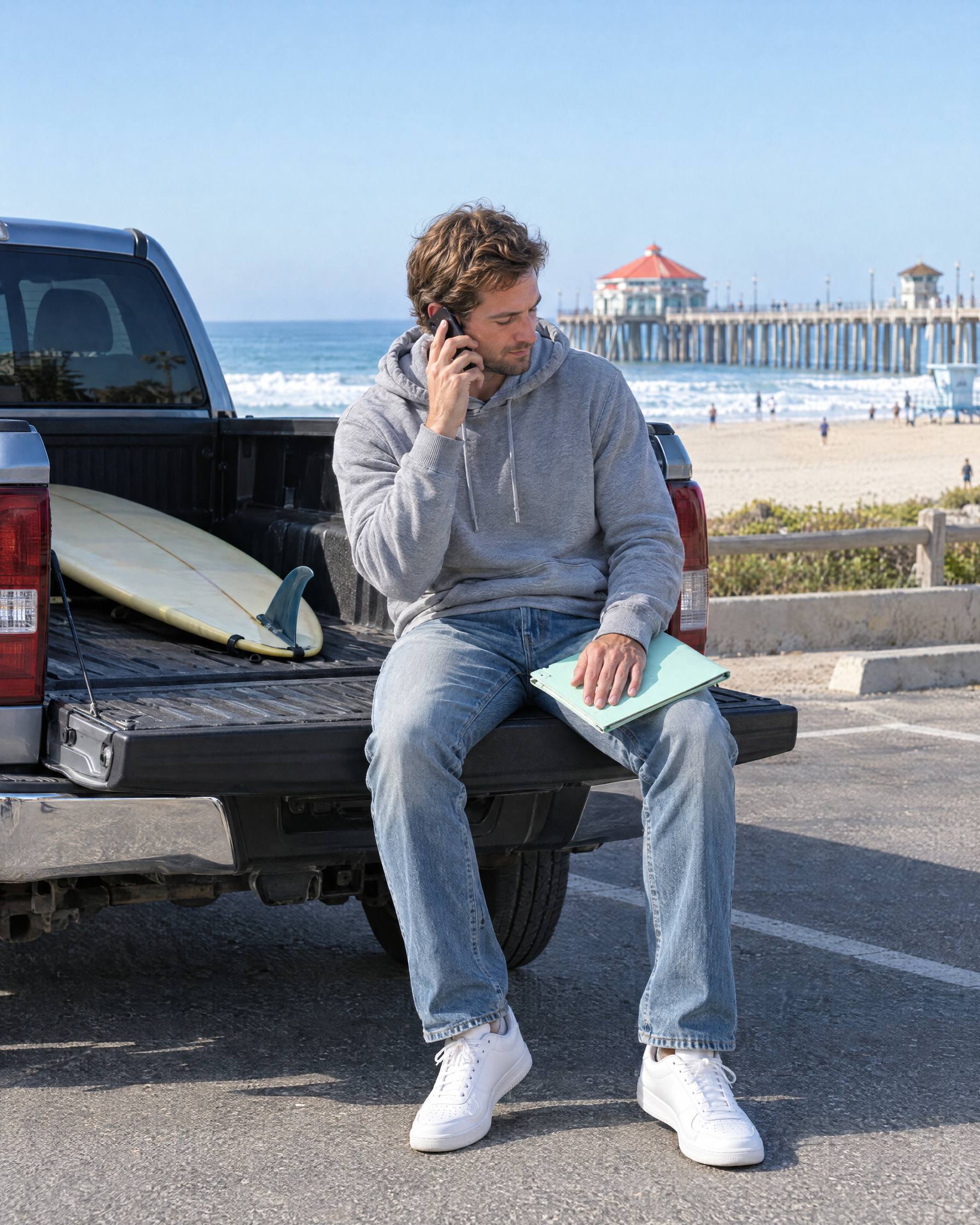
On his pickup’s tailgate in the beach lot by the Huntington Beach pier, a man listens on his phone, a mint folder of papers under his hand.

Scammers send fake escrow emails with their own bank details, and they can look exactly like ours. Before you send money or bank details, call us at (714) 962-0999, the number on this site, and check the instructions. If money already went out, call your bank first, then report it at ic3.gov.

Real or fake? Try four practice messages.

Four made-up messages: two for buyers, one for sellers, one trick from our real address. Pick real or fake, and see the tells.

Practice message 1 of 4

Email

From
Advantage One Escrowclosing@advantageoneescr0w.com (a made-up practice address)
Subject
URGENT: new wiring instructions

Hi! Quick update. Our bank changed this morning, so please send your down payment to the new account in the attached PDF. It has to go out by 3 p.m. today or your closing could slip.

Made-up messages, just for practice.

How does escrow wire fraud work?

The FBI calls it business email compromise. In a real estate deal, it usually goes like this.

  1. Step 1: They get close to your deal

    Criminals break into an email account, or set up an address that looks like one, and pose as someone in your deal: an agent, a title officer, an escrow officer, even the buyer or the seller.

  2. Step 2: They send “new” wiring instructions

    The message looks routine. The bank account is theirs. It often comes with a deadline, so you won’t stop to check.

  3. Step 3: The money moves on fast

    Once a wire lands in their account, they move it again quickly. That’s why the first minutes after a wrong wire matter most.

Six habits before any money moves

Every time

  • Get our number from this site, never from an email or a text: (714) 962-0999. Save our number to your phone.
  • Call us before you send any money, and before you give anyone your bank details.
  • Treat any change to wiring instructions as a warning, even from an address you know. Real accounts get hacked.
  • Read the sender’s full email address, especially on your phone. Look for one wrong letter or a zero for an “o.”
  • Don’t click links or open attachments in a message you didn’t expect.
  • Watch your bank account for anything you don’t recognize.

Selling? The scam goes after your sale money too

Sellers get these messages as well: a text or an email asking where to send your sale money, with a link or a form for your bank details.

Never send bank details in reply to an email or a text, even one that looks like ours. Call us at (714) 962-0999, and we’ll tell you how your money reaches you.

Already sent money? Do this now

Minutes matter. Do these in order.

  1. Step 1: Call your bank

    Ask it to recall the wire, and to contact the bank that received the money. Do this the moment you suspect fraud.

  2. Step 2: Report it to the FBI

    File a complaint at ic3.gov, with the banking details the form asks for, whatever the amount. The FBI’s Recovery Asset Team works with banks to try to freeze money from fraudulent transfers. It’s an attempt, not a guarantee.

  3. Step 3: Call us

    Call (714) 962-0999. If we’re closed, call the minute we open. Save our number to your phone.

Orange County owners: a free alert on your property’s title

The Orange County Clerk-Recorder mails property owners a free courtesy notice when a document affecting the title to their property is recorded. There’s nothing to sign up for. If you get one you don’t expect, contact the Recorder.

FAQ: Questions about wire fraud

If yours isn’t here, call and ask: (714) 962-0999.

How do I know an email is really from you?

You can’t tell for sure from the email. Real accounts get hacked, so even a message from our real address can be a trap. Call us at (714) 962-0999, the number on this site, before you act on any wiring instructions.

What is business email compromise?

It’s the FBI’s name for scams where criminals break into or copy an email account to trick someone into sending money. In real estate, the fake message usually carries new wiring instructions for a deposit, a down payment or a seller’s proceeds.

I already sent the money. Can I get it back?

Sometimes. Call your bank right away and ask it to recall the wire, then report it at ic3.gov. The FBI’s Recovery Asset Team works with banks to try to freeze the money, but there’s no guarantee, so every minute counts.

Who do I report wire fraud to?

Your bank first, then the FBI’s Internet Crime Complaint Center at ic3.gov. Then call us at (714) 962-0999.

Is it safe to send my bank details for my sale money?

Never in reply to an email or a text. Call us at (714) 962-0999 first, and we’ll tell you how your money reaches you.

Sources and fine print

  1. FBI Internet Crime Complaint Center: Business email compromise
  2. FBI: Business email compromise
  3. IC3 complaint form
  4. IC3 2025 Annual Report (the Recovery Asset Team)
  5. DFPI Escrow Bulletin, February 2025: social engineering scams
  6. Orange County Clerk-Recorder: property documents and courtesy notices

Checked September 2026 against California law and the state agencies’ own pages. Page updated . This is general information, not legal or tax advice. Every deal is different, so talk to your attorney or CPA about yours.

Call (714) 962-0999Open escrow